Call Us Today! 540-685-4321|info@funeralresources.com

Grave Headstone Monuments Tombstone Memorial

Grave Headstone, Tombstones and Monuments Memorial

What to Put on a Grave Headstone, Monuments,

Grave Marker, or Personalized Memorial?

Losing a loved one is hard.  Honoring that loved one after they are gone can be just as hard.  The first step is choosing what to say on the memorial for a grave headstone, grave marker, or any other type of monuments.

What Do You Want to Say About Your Loved One?

You could mention their time served in the military or their relationships to the family.  You could incorporate some of their favorite hobbies or passions.  Over the years we’ve seen a lot of memorable quotes and sayings.
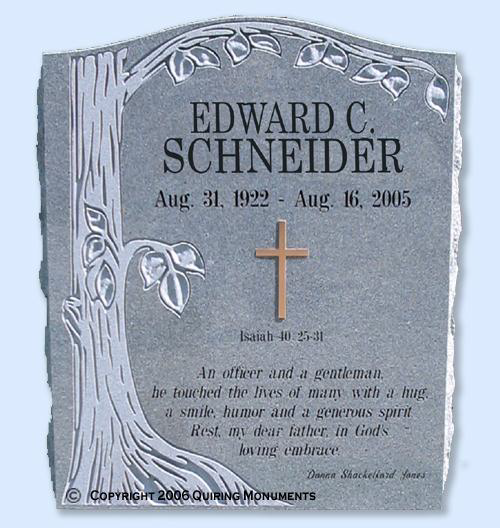
Grave Headstone

Here are just a few that you might use as inspiration:

“An officer and gentleman, he touched the lives of many with a hug, a smile, humor, and a generous spirit. Rest, my dear father, in God’s loving embrace.” ~ Donna Shackelford Jones

“Grieve not, nor speak of me with tears, but laugh and talk of me as if I were beside you there.” ~ Isla Paschal Richardson

“What we have once enjoyed we can never lose. All that we love deeply becomes a part of us.” ~ Helen Keller

When choosing a saying, you might ask yourself, would your loved one like this and does it reflect their impact on the world?

What are Your Options When Designing a Memorial?

Once the text is chosen, you’ll need to consider the design.  There are numerous options for engraving and designing a custom headstone or marker.  Elements like font size and color greatly impact the design of the memorial.  If you’re working with a custom headstone designer, you’ll want to defer to them for the best font choice.  Your designer will also be able to determine the best layout so everything is easy to read and well balanced.

There are also other options when choosing a custom headstone or memorial.  For instance, do you want to have a vase, religious symbol, or even a picture on the monument?  These questions should be brought up with your funeral director and cemetery coordinator.  To keep track of these answers you might want to download the Cemetery Regulations Checklist, put together by Quiring Monuments.

Remember to keep in mind the purpose of the memorial, whether it’s a grave headstone, grave marker, cremation memorial, or any other type of personalized monuments, it should represent your lost loved one and be a place for the family to remember them fondly.
Funeral and Death Estate Tax Planning

Funeral Estate Tax Planning

Estate and Inheritance Tax Questions to Ask

After Grieving the Death of a Loved One

When suffering from the grief and loss of a loved one, it can be the most painful and stressful time in our life. It’s important to surround our selves with close family or friends as a support system.

The experience is one that can seem like time is standing still because of the grief, but at same the time, it can be quite overwhelming and as if time were flying right past us. When someone we love passes away, there are so many details that need to be considered while grieving. That process in-and-of-itself can be painful. Funeral arrangements, memorial services, obtaining death certificates, and legal matters are all part of the details involved in losing a loved one.

Things like inheritance and estate tax issues don’t need to be addressed immediately. Focusing on our friends and family are obviously more important. But eventually the details will need our attention.

Helpful Considerations When Facing a Loss:

Is Life Insurance Taxable?

While life insurance proceeds are included in the estate, they are not taxable (as income) to beneficiaries. However, you should contact the life insurance company to understand the procedure to cashing in their policy. Typically insurance companies will require a claim form and death certificate. But generally, life insurance is not taxable to inheritors. (Click to learn more about burial insurance and/or funeral insurance)

What is My Inheritance Tax Rate?

Inheritance tax will vary from state-to-state. Typically if the value of the estate that’s being inherited is high in value, your tax rate will be higher as well.

For example, tax preparers in Indianapolis, Indiana will tell you that Indiana’s inheritance tax system breaks the heirs or inheritors into three classes or groups. Systems in Pennsylvania are very different. For Indiana, each group has different rate schedules and exemptions. Here’s how this looks according to the Indiana Department of Revenue:

•  Class A – direct ancestor or descendant, stepchildren, direct descendant of a stepchild: $100,000 exemption.
•  Class B – siblings, descendants of sibling, spouse, widow or widower of your child: $500 exemption
•  Class C – anyone else excluding spouse: $100 exemption

Are Bank Accounts Taxable?

Revenue-producing assets like bank accounts and stacks are not taxable upon inheriting them. However, the income that these assets generate is taxable to the recipient.

What About Pensions and IRA’s

A person inheriting a pension or IRA is required to pay taxes on the amount received, as the decedent (person who is deceased) would have during their life. An IRA or similar fund can be rolled over tax-free into the beneficiary’s name and treat it as their own.

While things like estate and inheritance tax is, by no means, the most important item to address when we suffer the loss of a loved one, it is important to understand what is and is not taxable during these times. Estate and inheritance taxes can be burdensome and stressful, but in some cases, an inheritance is not taxable to you.

Estate lawyers are available to help guide us during times of funeral estate planning, but they can often be costly. Check with your tax preparer or attorney handling the estate as to what you need to know when sorting out inheritance and estate issues.