Mausoleums – Cemetery Burial Options
Why are Mausoleums Chosen
Among Cemetery Planning Burial Options?
Mausoleums are widely considered to be one of the common Cemetery planning burial options. By definition, they are an external, free-standing building that contains the burial chamber of a deceased person or persons. Sometimes they may even contain a chapel. Historically, mausoleums were large, stately buildings built for persons of importance. Smaller mausoleums became favorites of the nobility in many countries and were in abundance in ancient Rome. After Christianity attained dominance, the popularity of mausoleums faded. They came back into fashion in Europe and the colonies during the early modern period.
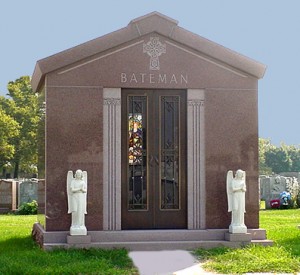
Typically, mausoleums were small buildings with a door for additional internments or visitor access, if the building was not permanently sealed. The burial chamber inside is either above the ground or in a vault below the ground. Modern mausoleums are primarily used to house cremated remains and are often located at a family’s Church, through choosing a Cemetery, as well as private land.
When planning a funeral in the United States, a mausoleum will normally refer to burial vaults below a larger structure, often known as the crypt mausoleum, where there are numerous sepulchral and spaces for cremation urns for interments. They are normally made of granite in a variety of granite colors and styles. Carved designs and memorial pictures can also be added.
Mausoleum Categories
There are two principle categories of mausoleums:
1. Private Estate Mausoleums
2. Cemetery-Owned Mausoleum Buildings
Private estate mausoleums can be Vestibules or Sarcophagus. Vestibules resemble small homes with a door that opens to a hallway that has crypts on both sides and often stained glass windows. A Sarcophagus has burial vaults above the ground and the caskets are entered in the crypts by removing the front panel. They can be organized side by side or placed in multiple rows and levels.