Plan a Funeral or Memorial Services
Key Considerations and Questions
When Planning Memorial Services
The purpose of memorial services are to give meaning to a person’s life. It is a public show of support and acknowledgment of the importance of the lost one. Although most funeral plan have traditionally been more formal events, and dictated by religious rites, memorial services are able to be more personalized and unrestricted. Memorial services are a wonderful opportunity for family and friends to gather and remember the deceased while offering support and comfort to one another.
Making funeral arrangements and the actual planning of a special funeral programs can provide much comfort to you as you honor the memory of your lost loved one. It also can provide a creative outlet and a meaningful way to expend pent-up energy and minimize coping with loss.
To ensure that nothing is overlooked in the planning of memorial services, we have compiled a list of questions for you to ether consdier or ask when memorial planning. Reviewing these questions and answers should help guide you through this process. So regardless of whether you are planning your own funeral. or making funeral arrangements for a loved one, we hope you find these useful.

When should memorial services be held?
A memorial service is a ceremony held after the death of an individual. The body is not present at a memorial service the way it is at a funeral service. Therefore, although it feels extremely time-sensitive, there really is no need to hurry. Most people and families understand and realize that there is no rush to have a memorial service immediately following a funeral, before a burial, or before or after cremations.
Selecting a date or a time frame for the memorial service is completely up to the family. Some families select dates that are meaningful such as the persons birthday or even the anniversary of death, while others prefer to schedule the memorial service for a time that is convenient for the majority of those who will be attending. There is no set time frame as to when you should hold a memorial service to remember and honor the deceased. However, whenever date you choose to use the words memorial service, be sure to allow guests plenty of time to make any necessary travel arrangements.
What type of memorial service should you have?
The purpose of a memorial service is to express one’s love and affection in a meaningful commemorative ceremony. While a funeral service is traditionally more structured by religious and cultural influences, a memorial service has no limits.
While planning a memorial service, you can select any venue and theme; however you should still keep in mind the comfort of the guests and the appropriateness of the service in respect of your loved ones memory. However, as long as you employ some common sense, there is no “right or wrong” place to hold this special service, whether you decide to have an informal backyard gathering, a graveside service, a formal church service, a sit down dinner at a local country club or any other location that was special to the individual or his or her family and friends.
How much should we spend on the memorial service?
Once you decide what type of memorial service you would like to have, the next step is to determine a budget. Give some thought to the number of people you’d like to invite–be it a small intimate group of close family and friends or everyone who knew the deceased. Also, consider funeral costs such as food, funeral flowers, funeral music, mementos and the actual location itself.
Some people may have paid in advance for their own funeral and memorial service costs. Paying for and making arrangements in advance is called Pre Need Planand may appeal to individuals who prefer not to burden their families with difficult decisions and end of life costs.
Although you don’t necessarily need to pay for services in advance, you can put together an comprehensive end of life plan, complete a Family Record Guide to indicate your final wishes and set money aside by setting up a payable-on-death (POD) account at your bank. When you set up this type of account, you name the person you want to handle you arrangements as the beneficiary. These accounts will not go through probate and the money goes directly to the beneficiary at the time of death.
Who should speak at the memorial service?
Once you decide how many people you want to speak, you should then think about who would be the most appropriate and comfortable with public speaking. Friends or family members may have been waiting for an opportunity to express their feelings for the departed to others and can provide an very personal perspective regarding their loved ones life. Close family and friends can be comforted by sharing a funeral poem, quote, story or other reading as well.
Not everyone was born a public speaker; however, usually every family has at least one person who can tell a great story, reenact a funny event or knows how to give a eulogy. Although it can take some of the pressure off of the family if you to select a clergyman to do most of the speaking and presentation, having key family members or friends speak can further personalizes the memorial service.
Please know that, at no cost, you can download, save, or print our Free Guides on How to Give a Eulogy.
What type of funeral poems or other materials should be read?
Look for favorite quotes the deceased may have had or even things that he or she wrote themselves, like old family letters. Inspirational readings, funeral poems or prayers would add depth to the memorial service.
What type of funeral music should be played?
Whether you select background music, take a few minutes to pause to play a special custom crafted funeral music, or elect to play funeral hymns, funeral music can add an emotional dimension to all memorial services. Most restaurants, churches or meeting halls will have a audio system you can use. Or, another option would be to have live music. Whether you select a band, DJ or soloist, having some form of music is highly recommended. Should your memorial service be in a location without electricity — a beach, graveside, mountain top or the like, a portable CD-player and a CD filled with your loved one’s favorite music is a good solution.
Should there be decorations?
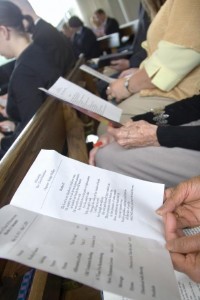
Depending on the venue and budget, decorations can range from elaborate funeral flowers, candles, videos and photo displays to a simple funeral programs or memorial card.
Some other ideas for decorations include: providing a memory table to display photos, mementos, military ribbons and medals, flags, hobby items, toys or sporting equipment of the deceased, awards, newspaper articles, and artwork.
Should we have food for the guests?
An ancient practice of sharing food during times of bereavement endures today. Depending on the venue, the budget and the number of guests, you may choose to have a full sit-down meal, a buffet or some light snacks and drinks. Many families serve the loved one’s favorite foods. A toast, with the deceased’s favorite beverage, is another tradition some families choose to honor.
Are you planning your own memorial service?
If you’re planning your own memorial service, be sure to talk with your family about your end of life plan so that they know what you want. Having a verbal conversation about your wishes will paint a better picture for your loved ones and can compliment a written plan, such as a Family Record Guide. Be sure to consult with your attorney and financial planner before finalizing anything. Keep a written record of your funeral arrangements close at hand, perhaps in a file cabinet at home, with a copy in a safe deposit box. Once you’ve created a Love Drawer, notify at least two people you trust where these records can be found. Doing so will help your family in a time by when you can no longer be there for them.